Berlin Neighborhoods: 7 Areas Compared
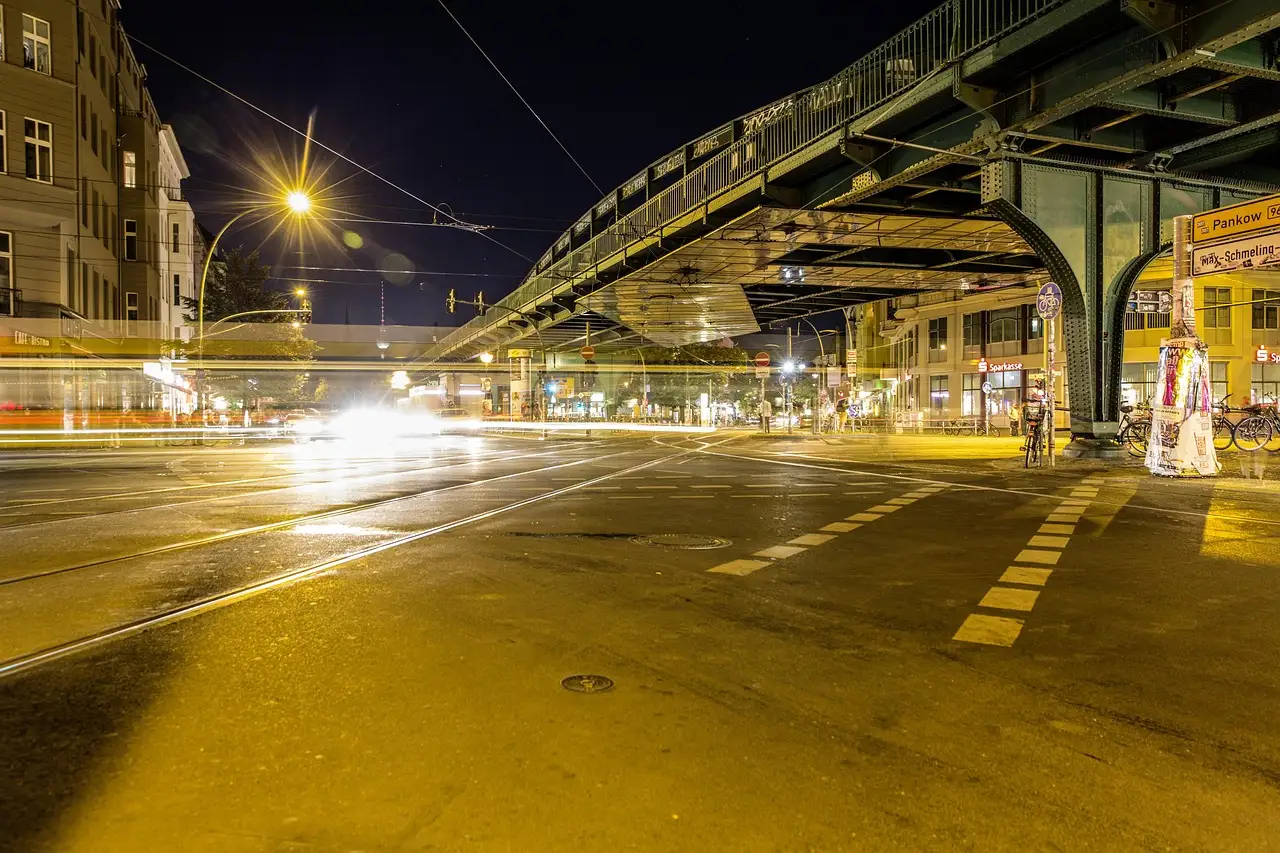
Berlin neighborhoods suit different trips, and the seven below cover almost every first visit. Mitte holds the big landmarks, Friedrichshain and Kreuzberg have the nightlife, and Prenzlauer Berg is calm and leafy. Charlottenburg, Neukölln and Schöneberg add shopping, a mixed food scene and the queer quarter.
Berlin is a city of districts, and each one has its own mood. The seven entries below are the areas visitors use most, and they run from the calmest to the loudest.
1. Mitte: best for first-time sightseeing
Mitte is the best base for a first visit because the big landmarks are in or next to it. The City of Berlin lists Gendarmenmarkt, the Lustgarten, Berlin Cathedral, St. Nicholas Church and the TV Tower at Alexanderplatz. You can reach the Brandenburg Gate, Museum Island and Alexanderplatz on the U5 line, which runs east from Hauptbahnhof.
Mitte is also the area most aimed at tourists. The City of Berlin's Mitte page calls it the historic starting point of the city. For the Gate and the Reichstag, read the Brandenburg Gate and Reichstag guide.
A three-hour street art tour starts at Neue Promenade 3 in Mitte. It is from €20 per person on GetYourGuide as of 28 October 2026, has free cancellation and is run by Original Berlin Walks GmbH. The listing does not name the districts it covers.
Choose Mitte if you want the sights on foot. Skip it if you want a quiet, local feel. Hotel Gat Point Charlie is one option near Checkpoint Charlie.
2. Friedrichshain: best for clubs and open-air evenings
Friedrichshain is the best area for nightlife and the East Side Gallery. visitBerlin describes it as having clubs and open-air flair, and it says Simon-Dach-Straße has the city's most diverse restaurant scene. The area around Warschauer Brücke and the RAW site draws partygoers, says the City of Berlin.
The East Side Gallery is a 1.3 km stretch of the Berlin Wall along Mühlenstraße, and it is free and open around the clock, according to the Berlin Wall Foundation. Bus 300 runs past it to Warschauer Straße.
The district is not all clubs. Boxhagener Platz is a spot for a drink outside, and Volkspark Friedrichshain at the northern edge is popular with young families. The whole district still feels a bit rough around the edges, in the City of Berlin's words. For a late night, read Berlin nightlife before you go.
Pick Friedrichshain if you want to go out and walk home. Hampton by Hilton Berlin City East Side Gallery sits less than 100 meters from the Gallery.
3. Kreuzberg: best for alternative Berlin
Kreuzberg is the best area for food streets and an alternative feel. visitBerlin calls it "cult and alternative". It names Oranienstraße as lively and Wrangelstraße as the place for partying by the Spree.
Markthalle Neun hosts Street Food Thursday every Thursday from 5 p.m. to 10 p.m., with free admission, according to the City of Berlin.
Kreuzberg and Friedrichshain sit in one borough and meet at the Spree. You can cover both in a day on foot, so many visitors treat them as one trip.
Kreuzberg suits you if you like cafés, bars and a mixed crowd. Skip it if you need a hushed street at night.
4. Prenzlauer Berg: best for cafés and quiet streets
Prenzlauer Berg is the best area for a calm, pretty stay. The City of Berlin calls it the largest connected area of Wilhelminian-style old buildings in Germany, with picturesque squares and streets. Cafés, pubs and restaurants fill the area around Kollwitzplatz and Helmholtzplatz.
The north-west, near Mauerpark, is less trendy and more residential than the south. Mauerpark lies on the former Wall strip, and tram M1 stops there on its way from Hackescher Markt to Pankow, according to BVG.
Prenzlauer Berg is the base for families and for anyone who wants to sleep well. The sights are a tram or train ride away. Hotel Kastanienhof is on Kastanienallee, between Mauerpark and the Kollwitzkiez.
5. Charlottenburg: best for shopping and palace gardens
Charlottenburg is the best area for classic West Berlin. The City of Berlin calls Kurfürstendamm a popular shopping mile for tourists and locals. The Kaiser Wilhelm Memorial Church stands on Breitscheidplatz, close by.
Behind Charlottenburg Palace are baroque palace gardens where you can walk for an afternoon. The Zoologischer Garten station is the starting point of bus 100, which reaches Alexanderplatz in about 30 minutes and passes the Brandenburg Gate on the way, as set out on the BVG sightseeing page.
The Hansaviertel architecture tour is a good extra if you like buildings. It is a two-hour walk, from €25 per person with free cancellation, as of 28 October 2026, and the listing offers English. It meets at Bachstraße 11 and is not suitable for children under 14. The standard group has up to 15 people. Food, drinks, tips and museum entry that is not in the plan are not included. The operator is Beyond and Beneath Tours.
Charlottenburg gives you a quiet, upscale feel with good transport. Art Nouveau Hotel am Kurfürstendamm is a few minutes from the Ku'damm.
6. Neukölln: best for a mixed food scene
Neukölln is the best area for a local, multicultural evening. About 160 nations live in the district, says the City of Berlin, and the Weserstraße area has become one of Berlin's trendiest. visitBerlin calls Weserstraße "the whole world in one neighbourhood".
Neukölln is changing fast. Its path runs from problem district to trendy neighborhood, and some parts still have a mixed reputation. The north feels urban, and the south is more suburban.
Neukölln has no big landmarks. Go for dinner and drinks, not sightseeing. The Hufeisensiedlung, a housing estate, is a World Heritage Site if you want a short architecture trip.
7. Schöneberg: best for queer Berlin
Schöneberg is the best area for the queer scene and quiet residential streets. According to visitBerlin, the area around Nollendorfplatz has been a mecca for the queer scene since the 1920s. The U-Bahn station dome there (lines U1, U2, U3 and U4) has been lit in rainbow colors since 2013.
The Lesbian and Gay Street Festival fills Motzstraße in mid-July. Winterfeldtplatz is another queer neighborhood hub, and the City of Berlin says the district is "synonymous with diversity".
Rathaus Schöneberg is where John F. Kennedy said "Ich bin ein Berliner". Friedenau, next door, is a quiet, middle-class residential area with villas and wide squares.
What the 12 boroughs are
Berlin has 12 boroughs, and the City of Berlin gives them as Mitte, Friedrichshain-Kreuzberg, Pankow, Charlottenburg-Wilmersdorf, Spandau, Steglitz-Zehlendorf, Tempelhof-Schöneberg, Neukölln, Treptow-Köpenick, Marzahn-Hellersdorf, Lichtenberg and Reinickendorf, in its borough assembly guide. Boroughs are administrative units, and the names that visitors use are smaller, older districts. Berlin merged 23 boroughs into 12 in 2001, which is why some borough names have two parts.
Seven areas fit most visits. The others, such as Spandau or Reinickendorf, are mainly residential or on the edge of the city.
How to choose between Berlin neighborhoods
Choose by mood, not by price, because the City of Berlin publishes no price comparison between districts. The 7.5 % city tax on hotel rooms applies in every area, according to the City of Berlin's tax page. For a full cost picture, see is Berlin expensive.
| Area | Best for | Mood | Watch out for |
|---|---|---|---|
| Mitte | First visit, sights on foot | Busy, historic | Tourist crowds |
| Friedrichshain | Clubs, East Side Gallery | Young, rough around the edges | Noise at night |
| Kreuzberg | Food, bars, alternative scene | Mixed, lively | Late-night noise |
| Prenzlauer Berg | Cafés, families | Calm, leafy | Sights are a ride away |
| Charlottenburg | Shopping, palace gardens | Upscale, quiet | Fewer nightlife options |
| Neukölln | Dinner, drinks | Multicultural, changing | No major landmarks |
| Schöneberg | Queer scene, calm streets | Diverse, relaxed | Quiet on weeknights |
Key Takeaway For a first trip, sleep in Mitte, Friedrichshain or Prenzlauer Berg, and visit the other areas on day trips by U-Bahn or tram.
Where should you avoid staying? visitBerlin says Berlin has no no-go areas, so no district is off limits. Its safety page advises you to keep valuables on your body and not to fall asleep on night trains. Berlin police list pickpocket hotspots on buses 100, 109, 119 and 200, on the U6, U7 and U9, and on all S-Bahn lines between Westkreuz and Ostkreuz. For more, read Berlin travel tips for first-timers.
Pro Tip Book a hotel near a U-Bahn or S-Bahn station, then use the getting around Berlin guide to check which ticket you need for the districts you want to visit.
A city is easiest to know one neighborhood at a time.
Is a tour worth it? For a first look at a district, walking alone is free and enough. A paid tour earns its price when you want the story behind a building or a mural. Both tours here have free cancellation. The street art tour has 4.7 stars from 843 reviews, and the Hansaviertel tour has 4.9 from 40, so the second rating rests on far fewer votes.
The easiest way to learn a district is to walk it with someone who knows it. A free walking tour in Berlin runs on tips: Sandemans' free tour lasts about two hours and meets in front of the Brandenburg Gate, according to the operator. It stays in the centre, so for Hansaviertel or street art you need a paid, district-based tour.
The Best Travel Destinations' count of GetYourGuide listings for Berlin on 27 October 2026 found that 28 of 352 experiences name a district in their title, and the median starting price is €25 per person.
One honest limit: these are visitor impressions drawn from official descriptions, not a ranking. Berlin does not publish an official list of the richest, coolest or safest areas, so this guide does not name one.
See a Berlin neighborhood with a guide
You can explore every district alone for free, so book a tour only if you want the stories behind the buildings and the street art. The Hansaviertel architecture tour (up to 15 people, two hours) is from €25 per person and the three-hour street art tour (up to 25 people) is from €20 per person, both with free cancellation. Food, drinks and tips are not included. Prices were checked on GetYourGuide on 28 October 2026.
-
Hansaviertel modernist architecture tour
from €25 per person
A two-hour guided walk, in English or German, through a district most visitors never see.
2 hours 4.9 (40 reviews) Free cancellation
Run by Beyond and Beneath Tours · not suitable for children under 14
Check availability: Hansaviertel modernist architecture tour on GetYourGuide -
Three-hour street art tour
from €20 per person
A guided English walk to less-known places for street art, with a meeting point in Mitte.
3 hours 4.7 (843 reviews) Free cancellation
Run by Original Berlin Walks GmbH
Check availability: Three-hour street art tour on GetYourGuide
Prices and ratings as shown on GetYourGuide on 28 October 2026.
Berlin walking tours, free and paidFAQ
What are the 12 boroughs of Berlin?
What is the coolest neighbourhood in Berlin?
What is the hipster area of Berlin?
Where to avoid staying in Berlin?
Conclusion
Berlin has no bad area for a visitor, only areas that fit your trip better or worse. Sleep in Mitte if you want the sights on foot, in Prenzlauer Berg if you want quiet, and in Friedrichshain if you want nightlife within walking distance. Then use a walking tour to get to know the rest.
Sources
- City of Berlin, Berlin districts (2026), last checked 28 October 2026
- City of Berlin, Mitte (2026), last checked 28 October 2026
- City of Berlin, Friedrichshain (2026), last checked 28 October 2026
- City of Berlin, Prenzlauer Berg (2026), last checked 28 October 2026
- City of Berlin, Charlottenburg (2026), last checked 28 October 2026
- City of Berlin, Neukölln (2026), last checked 28 October 2026
- City of Berlin, Schöneberg (2026), last checked 28 October 2026
- visitBerlin, Nightlife districts in Berlin (2026), last checked 28 October 2026
- visitBerlin, Nollendorfplatz and Winterfeldtplatz (2026), last checked 28 October 2026
- visitBerlin, Safety in Berlin (2026), last checked 28 October 2026
- City of Berlin, Pickpockets (2026), last checked 28 October 2026
- City of Berlin, Elections to the borough assemblies (2026), last checked 28 October 2026
- Berlin Wall Foundation, East Side Gallery (2026), last checked 28 October 2026
- City of Berlin, Street Food Thursday (2026), last checked 28 October 2026
- City of Berlin, Accommodation tax (2026), last checked 28 October 2026
- New Europe Tours, Free Tour of Berlin (2026), last checked 28 October 2026
- BVG, Sightseeing by bus and tram (2026), last checked 28 October 2026