Food in Berlin: Seven Dishes to Try
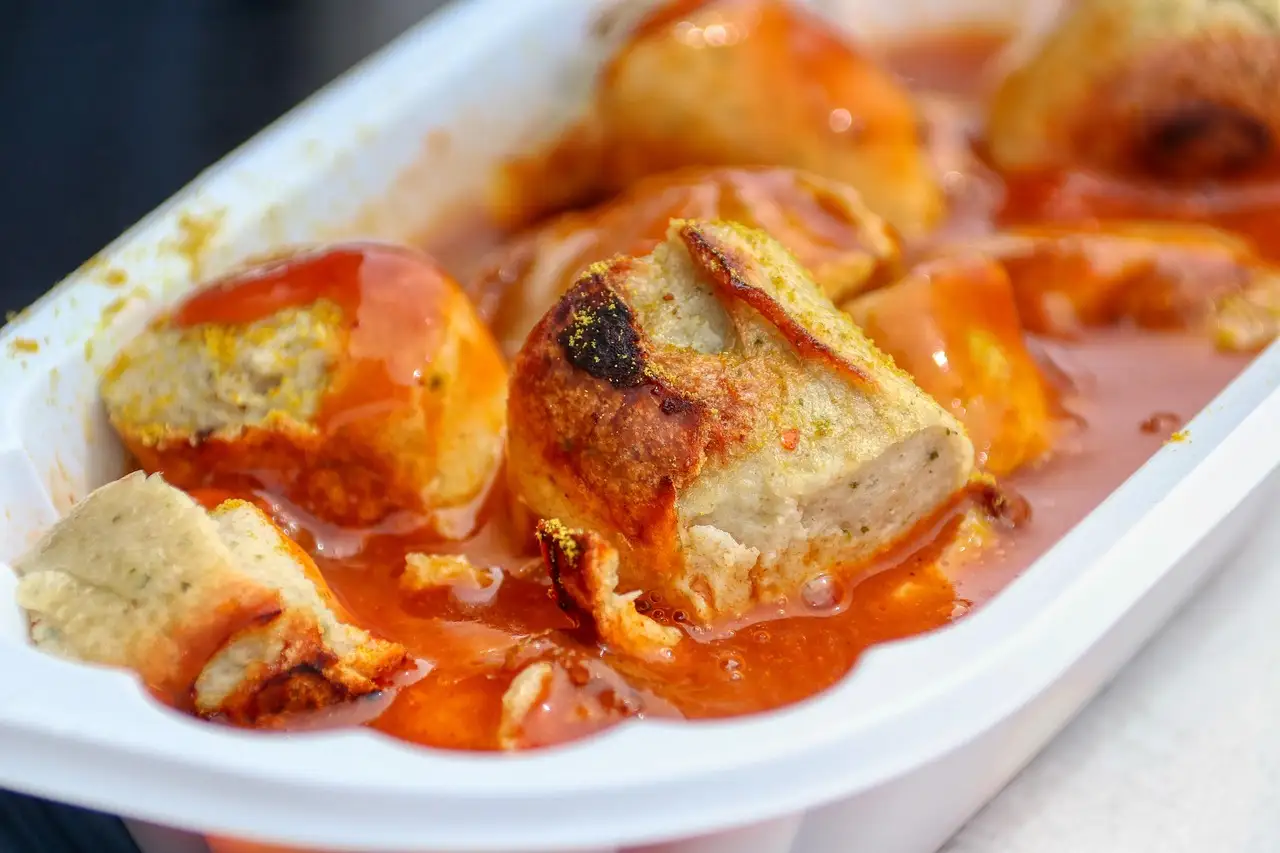
Food in Berlin is known for currywurst, döner kebab and Buletten (Berlin meatballs), and you can eat all three cheaply at snack stands and market halls. Add a Berlin doughnut from a bakery, a sit-down plate of pork knuckle and Middle Eastern street food, and you have the seven dishes below. Each one comes with where to try it and what to know before you order.
The seven dishes below follow the order most visitors meet them, from the snacks on the street to a seat at the table.
1. Currywurst: the snack Berlin made famous
Currywurst is a grilled sausage topped with a spicy curry-tomato sauce, and Berlin claims it as its own. The City of Berlin credits Herta Heuwer, who ran a sausage stand in Charlottenburg in the 1940s or 50s, as its inventor, according to its guide to Berlin specialties. Most stands offer sauces from mild to fiery hot.
The big question at the counter is whether you want the sausage with skin or without. Visit Berlin's street food page names Witty's Currywurst in Schöneberg, Konnopke's Imbiss in Pankow and Curry61 at Hackescher Markt as places to try it. You can also get it with fries or as a vegan version.
If you want the story along with the sausage, a three-hour currywurst tour with city history is from €32 per person as of 28 October 2026. It has three food stops, a walk through Prenzlauer Berg and Wedding, a viewpoint at the Humboldthain flak tower and a stroll through Mauerpark. The group has up to 20 people, and the tour meets at Curry Baude in Gesundbrunnen. Dönerpapst Tours runs it. It has free cancellation and only 8 reviews so far.
2. Döner kebab: Berlin's other famous snack
A döner is juicy grilled meat from a skewer, fresh salad and spicy sauce, all wrapped in a crispy flatbread. Visit Berlin calls it a Berlin original, invented in the 1970s by a Turkish guest worker. The City of Berlin names Kadir Nurman, who put the meat into pita bread in 1972.
You will find a stand on almost every corner. Famous stalls include Mustafa's vegetable kebab on Mehringdamm and Vöner in Friedrichshain, according to Visit Berlin. Berliners argue about which shop is best, so ask a local and try two.
Street food also feeds people on a night out, which the guide to nightlife in Berlin covers. It is listed there as a way to satisfy hunger after dark.
Key Takeaway Currywurst and döner both started in Berlin, so they are the two snacks to eat before any other dish.
3. Buletten: the Berlin meatball
Buletten are juicy meatballs, halfway between a meatball and a hamburger patty. The City of Berlin calls them a staple of local cooking. You can get them in snack bars, pubs and traditional restaurants.
As fast food, they usually come in a bun with ketchup or mustard. Berlin home cooks serve them with mashed potatoes and mushy peas or with fried onions. Order them at a pub if you want the sit-down version.
4. Pfannkuchen and Splitterbrötchen: the bakery stop
A Pfannkuchen is Berlin's version of a doughnut. The name means "pancake" in English, but these are round, deep-fried pastries. They are traditionally filled with plum or strawberry jam, and bakeries also sell them with powdered sugar, glaze or custard. Elsewhere in Germany, they are called "Berliners".
A Splitterbrötchen sits between a roll and a croissant. It is soft and slightly sweet, with a crispy crust that "splinters" when you bite it. The City of Berlin says it has many fans, especially in the east of the city. Look for it at traditional bakeries that bake fresh every morning.
Pro Tip Buy your Pfannkuchen at a bakery in the morning, when the Splitterbrötchen are fresh too, and eat both before lunch.
5. Eisbein: pork knuckle at a sit-down meal
Eisbein is a hearty, cured pork knuckle and a well-known part of classic Berlin cooking. It is served with mushy peas and sauerkraut. Restaurants that cook traditional Berlin home food are the best place to find it.
Be ready for the texture. The pork rind is cooked soft, not crispy like the baked knuckle common in southern Germany, and the City of Berlin says it takes some getting used to. If you want a quick lunch, pick another dish on this list.
6. Market halls and Street Food Thursday
Berlin's market halls and weekly markets have become street food spots. Markthalle Neun is the best-known hall, according to Visit Berlin. Its Street Food Thursday runs every Thursday from 5 p.m. to 10 p.m. at Eisenbahnstraße 42 in Kreuzberg, and admission is free, as the City of Berlin's market page says.
The hall says it has run Germany's first street food market since 2013. Markthalle Neun's own page says not every cook comes each week, so the stalls change. You may find anything from Thai and Taiwanese dishes to smoked sausage, so go hungry and share.
Pro Tip Go on a Thursday evening and walk the whole hall before you buy, because the stalls change from week to week.
A guided option helps if you are short on time. A small-group street food tour with at least five tastings is from €67 per person as of 28 October 2026. It takes three hours, has up to 8 people and meets at Torstraße 175. NO DIET CLUB runs it, it is bookable in English, and it has free cancellation.
7. Falafel and shawarma: Middle Eastern street food
Falafel are crispy chickpea balls, and shawarma is spit-roasted chicken. The City of Berlin says both are available freshly made on every corner. Kebab shops wrap them in bread to take away, while restaurants serve them with salads and roasted vegetables.
The only choice left is the sauce: hummus, garlic or hot sauce. Falafel is also an easy pick if you do not eat meat. Visit Berlin says no other German city has as many purely vegan and vegetarian restaurants, and that nearly every snack stand has a vegan or vegetarian option.
| Dish | Best for | Where to start | What to know |
|---|---|---|---|
| Currywurst | A quick, classic lunch | Witty's in Schöneberg, Konnopke's Imbiss in Pankow | Choose with or without skin |
| Döner kebab | A filling snack, day or night | Mustafa's on Mehringdamm, Vöner in Friedrichshain | Stands are on almost every corner |
| Buletten | A pub or snack bar bite | Snack bars, pubs and traditional restaurants | Often served in a bun |
| Pfannkuchen | Breakfast or a sweet stop | Any traditional bakery | Called "Berliner" elsewhere in Germany |
| Eisbein | A sit-down dinner | Restaurants serving Berlin home cooking | Soft rind, mushy peas and sauerkraut |
| Market halls | Trying many things at once | Markthalle Neun, Thursday 5 p.m. to 10 p.m. | Stalls change each week |
| Falafel and shawarma | A cheap vegetarian or chicken wrap | Kebab shops and Middle Eastern restaurants | Pick hummus, garlic or hot sauce |
How to choose food in Berlin for your budget and time
Pick snacks if you want to eat cheaply and often, a sit-down restaurant if you want a rest, and a food tour if you want a guide to choose for you. The table above shows where each dish fits.
In 2026, a mid-range restaurant meal in Berlin cost €15 to €28 per person in published prices, as reported in the 2026 Berlin Travel Cost Study. Snack stands cost less than that, but we found no official price list for them, so read the menu board.
The Best Travel Destinations' count of GetYourGuide listings for Berlin on 27 October 2026 found 18 food tours among 352 experiences, and all 18 offer free cancellation.
Ordering is simple, and tipping works differently from some countries. In restaurants, service is usually not included. The City of Berlin says to give 5 to 10 percent in casual places and 10 percent in nicer restaurants, as set out in its tipping guide. Do not leave money on the table. Hand your cash or card to the server and say the total you want to pay. In pubs and coffee shops, a few coins in the tip jar are fine.
A food tour is worth it when you want a guide to pick the stops and explain the dishes. A food tour with a full meal and beer is from €67 per person as of 28 October 2026. It lasts three hours, has up to 12 people and meets at St Mary's Church on Karl-Liebknecht-Strasse. The operator is Do Eat Better Experience. The listing says it is not suitable for people with mobility impairments, and it excludes extra food and drinks. The Mitte culinary food tour is from €44 per person, includes five specialities in different restaurants and excludes drinks. It is bookable in English and German, and Adventure World Tours runs it. You can browse more on the Berlin food tours page.
One honest limit: a food tour is the wrong pick if you only want one cheap snack. A stand is simpler, and you pay only for what you eat.
The best way to know a city is to eat where its people eat.
Let a guide pick your food stops
Four food tours are in our picks, from €32 to €67 per person, all with free cancellation as checked on GetYourGuide on 28 October 2026. They range from a currywurst walk to a full meal with beer.
-
Currywurst tour with city history
from €32 per person
You taste the dish Berlin is known for at three food stops and see Mauerpark and a flak tower viewpoint on the way.
3 hours 5.0 (8 reviews) Free cancellation
Run by Dönerpapst Tours
Check availability: Currywurst tour with city history on GetYourGuide -
Guided street food tour with tastings
from €67 per person
A small group of up to eight people with at least five tastings, a good fit if you want to try many things in one evening.
3 hours 4.8 (401 reviews) Free cancellation
Run by NO DIET CLUB
Check availability: Guided street food tour with tastings on GetYourGuide -
Food tour with a full meal and beer
from €67 per person
A dinner-sized tasting that adds Currywurst, döner, craft beer and a Berliner Pfannkuchen at more than four stops.
3 hours 4.8 (56 reviews) Free cancellation
Run by _Do Eat Better Experience · not suitable for people with mobility impairments
Check availability: Food tour with a full meal and beer on GetYourGuide -
Mitte culinary food tour
from €44 per person
Five specialities in different restaurants, handy if you are staying in the centre.
3 hours 4.6 (506 reviews) Free cancellation
Run by Adventure World Tours
Check availability: Mitte culinary food tour on GetYourGuide
Prices and ratings as shown on GetYourGuide on 28 October 2026.
Berlin nightlife: pub crawls, club tours and how to get inFAQ
What food is Berlin known for?
How much does food cost in Berlin?
Is food expensive in Berlin?
How to order food in Berlin?
Does Berlin have good food?
Conclusion
Food in Berlin is easiest when you start with the snacks the city made famous. Eat a currywurst and a döner, try Buletten and a Pfannkuchen, and visit Markthalle Neun on a Thursday evening. Add a sit-down meal when you want a rest, and join a food tour if you would like a guide to pick the stops. After dinner, the city has a lot more to offer, and the nightlife guide is a good next step.
Sources
- City of Berlin, Berlin Delicacies You Have to Try (2023), last checked 28 October 2026
- visitBerlin, Street food in Berlin (2026), last checked 28 October 2026
- Markthalle Neun, Street Food Thursday (2026), last checked 28 October 2026
- City of Berlin, Street Food Thursday (2026), last checked 28 October 2026
- City of Berlin, Tipping Etiquette (2023), last checked 28 October 2026