Outdoor Attractions in Toronto: 8 Picks by Season
The best outdoor attractions in Toronto are the Toronto Islands, the waterfront trail, the city beaches, High Park and the Scarborough Bluffs, with Algonquin Park and Bruce Peninsula National Park as long day trips out of town. Eight picks follow, each with its season, its cost where an official page gives one, and what is closed right now.
| Pick | What you do | Cost | Watch for |
|---|---|---|---|
| 1. Toronto Islands | Walk, cycle, swim | Ferry from CA$9.57 | Centreville closed until spring 2027 |
| 2. Harbour cruise | See the skyline from the water | From €18 | The listing does not say the boat lands |
| 3. Martin Goodman Trail | Cycle or walk the shore | No fee on the City page | Check the City's trail map |
| 4. City beaches | Swim, sunbathe | No fee on the City page | Lifeguards June to September |
| 5. High Park | Gardens, pond, blossoms | No park fee listed | Unpaved trails not kept up in winter |
| 6. Scarborough Bluffs | Cliffs and lookouts | No fee on the City page | Weekend parking fills fast |
| 7. Algonquin Park | Hike, canoe | CA$21.00 per vehicle | Permit online only |
| 8. Bruce Peninsula | Cliffs and the Grotto | Admission, parking, reservation | Grotto slot needed May to October |
1. Toronto Islands: beaches, bike paths and the skyline
The Toronto Islands are the easiest outdoor escape from downtown, and they have no cars. The ferry from the Jack Layton Ferry Terminal costs CA$9.57 round trip for an adult, according to the City of Toronto, and the ticket works for any island dock. For the route to the terminal, see getting around Toronto.
On the islands you walk or cycle. Toronto describes a network of pedestrian-friendly multi-use trails, and public vehicles are not allowed. Four of Toronto's 10 city beaches are here: Hanlan's Point, Centre Island, Gibraltar Point and Ward's Island. You can bring your own bike on the ferry, or use Bike Share Toronto stations on the islands. Bike Share bikes cannot go on the boat.
Distances are longer than they look. Centre Island to Ward's Island is about 35 minutes on foot, and Ward's Island to Hanlan's Point is about 70. The Toronto Islands are also made of sand that, the City says in its Island Park plan, came from the Scarborough Bluffs and was carried by wind and wave. A storm in 1858 cut the sand spit loose from the mainland.
Two things are closed for now. Centreville, the amusement park on Centre Island, says it is closed until spring 2027. Lifeguards on the island beaches are off duty until summer 2027. The Toronto Centre Islands page covers each dock in detail.
If you would rather ride with a guide, the Toronto Islands bike tour, morning or twilight is from €87 per person and lasts 3.5 hours. Toronto Bicycle Tours runs it, and the price includes a bike, helmet, water, snacks and the ferry ticket, and offers free cancellation up to 24 hours ahead. It meets at 124 St Patrick St (prices and ratings as shown on GetYourGuide).
Pro Tip Leave your own bike at the Bike Share docking station at the ferry terminal, then pick up a bike on the island and return it there before you sail back.
2. Toronto harbour: the waterfront from a boat
A harbour cruise is the shortest outdoor outing on this list, and it shows the skyline and the island shore from the water. For more boat options, see Toronto harbor tours.
The 45-minute guided harbour cruise is from €18 per person. It meets at the Harbour Star boat at 235 Queens Quay W and is run by Shop Dine Tour. Live narration is included, food and drinks are extras you buy on board, and free cancellation is offered up to 24 hours ahead. Rated 4.66 from 491 reviews (prices and ratings as shown on GetYourGuide).
Nothing in the description says the boat lands on the islands. A cruise gives you the view, not the sand. Dress for the weather, because you are asked to bring weather-appropriate clothing. No season is named, so check the dates when you book.
3. Martin Goodman Trail: a waterfront ride or walk
The Martin Goodman Trail is a 20-plus kilometre path along Toronto's waterfront, from the western beaches to the eastern ones. Toronto says the Unwin Avenue section, finished in 2019, filled in a missing link to complete that trail. The trail belongs to a network of over 300 km of trails inside the city.
You can walk part of it or ride it end to end. That page gives no surface, fee or opening hours, so look at the trail map before you choose a stretch. Other sources give a longer total length for the whole route, which is why the safe number is the City's "20+ km".
A guided ride takes the planning off your hands. The waterfront and islands guided bike tour is from €70 per person and lasts 3.5 hours. Pedal Toronto runs it from 11 Gristmill Lane, and it includes a bike, helmet, water and the ferry, depending on the option you pick. The group is small, and the listing says it is not suitable if you cannot ride a bike. Rated 4.89 from 153 reviews, with free cancellation (prices and ratings as shown on GetYourGuide).
4. City beaches: ten to choose from, with lifeguards in summer
Toronto has 10 city beaches: Bluffer's Beach, Centre Island, Cherry/Clarke, Gibraltar Point, Hanlan's Point, Kew-Balmy, Marie Curtis Park East, Sunnyside, Ward's Island and Woodbine. The City's beach page lists them all.
Lifeguard supervision and beach maintenance run from June to September. They ended for the 2026 season, so there is no supervised swimming until summer 2027. The City says swimming without supervision is not recommended, and it asks you to swim only when lifeguards are on duty, inside the areas marked with red-over-yellow flags. Dogs are not allowed on supervised swimming beaches.
Seven of the 10 supervised swimming beaches have earned the Blue Flag award. Which seven is not stated, so no single beach can be called a Blue Flag beach from that page. Woodbine has mesh mats that reach the water's edge. At Bluffer's Beach, the City warns that parking lots fill up very quickly on weekends.
Key Takeaway Lifeguards on Toronto's beaches work June to September only, so outside those months the beaches are for walking and views, not swimming.
5. High Park: gardens, Grenadier Pond and cherry blossoms
High Park is the city's big green park, with gardens, a pond and trails you can reach on foot. You will find the Japanese Garden, the Hillside Gardens and the Colborne Lodge Heritage Gardens, and the page says the park holds an outstanding concentration of rare plant species.
Grenadier Pond is home to many kinds of plants and animals, and fishing is allowed along a marked part of the shore. Stay on the paved paths and follow the signs. Unpaved trails are not maintained in winter, so plan a walk there for the warmer months.
Cherry blossoms are the best reason to come in spring. Peak bloom usually falls in late April or early May and lasts four to 10 days. Vehicle access is limited at peak bloom.
No entrance fee is listed for the park itself. The Trackless Train, a 30-minute ride through the park, costs CA$9 for adults aged 13 to 64 and CA$6 for children and seniors, taxes included. The train runs daily from 10:30 a.m. to dusk in spring, summer and fall, weather permitting. The High Park Animal Display, which the City dates to 1893, keeps animals such as bison and llamas.
6. Scarborough Bluffs and Bluffer's Park: cliffs, sand and lookouts
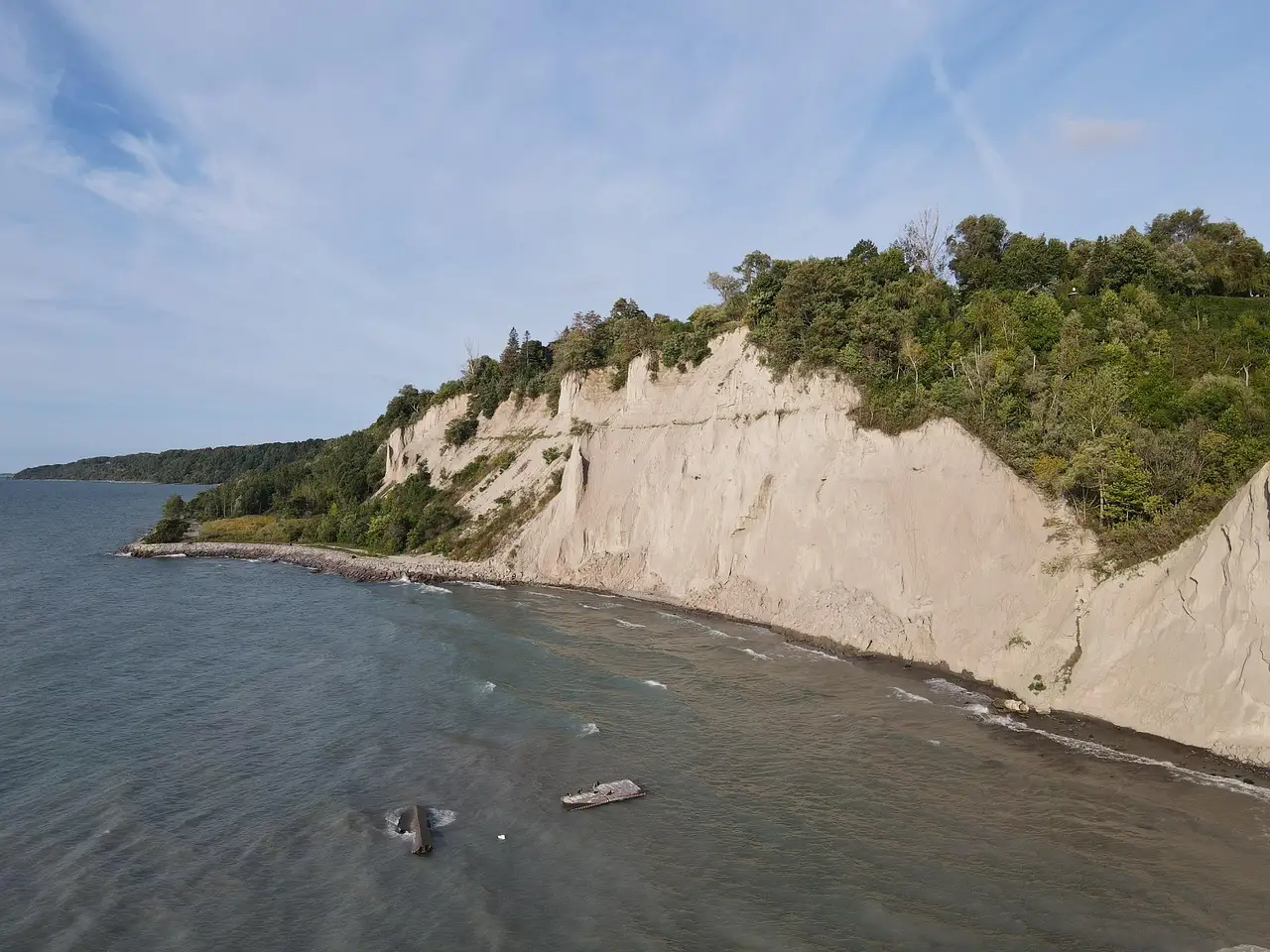
Bluffer's Park is the easiest way to see the Scarborough Bluffs from below, with a sandy beach, picnic areas, trails and lookouts. The City of Toronto calls it a destination park along the waterfront in Scarborough, about 76.7 hectares (190 acres). It also has a boat launch.
The pale clay cliffs are the sight that gives the area its name. They also shaped the city: the City's Island Park plan says the sand of the Toronto Islands came from the Scarborough Bluffs.
The pages used here give no parking fees and no trail map for the park, and the City is now planning upgrades. Expect crowds on summer weekends, because the City says the Bluffer's Beach parking lots fill up very quickly then. Come early, or come on a weekday.
The best city parks make the water feel close.
7. Algonquin Provincial Park: lakes, trails and canoes
Algonquin Provincial Park is a long day trip from Toronto, and the guided tour below takes 13 hours. Ontario Parks describes a 56 km stretch of Highway 60 with 14 interpretive trails, a visitor centre and canoe rentals.
Drivers need a day-use permit. The park's own fee page lists CA$21.00 per vehicle per day on the Highway 60 corridor, taxes included, and warns that Ontario Parks may change fees. The permit covers one vehicle and up to 14 people from 7 a.m. to 10 p.m. You buy it online up to 5 days ahead, not in person, and it is non-refundable. The Algonquin Park fee page has the details.
If you do not drive, a tour solves the permit and the car. The Algonquin Park and Ragged Falls day trip is from €108 per person, and it includes entry permits, a group canoe on the Oxtongue River and a stop at Ragged Falls. It is run by Northbound Tours, meets at the Yorkdale TTC passenger pick-up at 5234 William R. Allen Rd and is a small group. The tour is not suitable for children under 12 or for people with mobility impairments, and it does not include food or tips. Rated 4.73 from 285 reviews, with free cancellation up to 24 hours ahead (prices and ratings as shown on GetYourGuide).
8. Bruce Peninsula National Park: cliffs and the Grotto
Bruce Peninsula National Park is a day trip for hikers, with cliffs of the Niagara Escarpment dropping into Georgian Bay. Parks Canada describes world-famous hiking in a rugged landscape.
The Grotto needs planning. From May 1 to October 31 you need a confirmed parking reservation, in a 4-hour slot, and when the lot is fully booked there is no Grotto access for that time. The walk to the Grotto and Indian Head Cove takes roughly one hour round trip, says Parks Canada. Reservations cannot be changed, and the page gives no dollar amounts. The total is the admission fee plus the parking fee plus the reservation fee. Construction on the peninsula can cause delays, and the Cyprus Lake campground was closed through October 31 because of bear activity.
Parks Canada gives no drive time from Toronto. The Bruce Peninsula National Park day trip is a 13-hour guided hike from €153 per person, run by Ontario Adventure Tours, with parking fees included and a group limited to 14 people. The listing offers pickup at 895 Courtneypark Dr E or 904 Dufferin St, not at hotels, and says ice cleats or snowshoes are included in winter. It does not name the trail, so ask whether it reaches the Grotto if that is your goal. Rated 4.38 from 191 reviews, with free cancellation up to 24 hours ahead (prices and ratings as shown on GetYourGuide).
Pro Tip For a self-drive Bruce Peninsula trip, book the Grotto parking slot before anything else, because without a booking there is no access.
How to choose outdoor attractions in Toronto by season
Pick by month first, then by what you want to do. The timeline below shows when the dated items on this list apply, and the table after it sorts the picks by effort.
Environment and Climate Change Canada's 1991 to 2020 climate normals put Toronto's daily average at 19.8 °C in June, 22.5 °C in July and 21.9 °C in August. The average falls below 0 °C in December, January and February. So summer suits beaches and bike rides, and the cold months suit short walks.
The Best Travel Destinations' count of GetYourGuide listings for the Toronto area in October 2026 found 15 active outdoor trips among 182 listings, from €35.88 to €210.77 per person. They are bike tours, a canoe tour, and hikes and camping in the parks north of the city.
Is a tour worth it, or should you go on your own? The islands, the trail, the beaches, High Park and the Bluffs are easy on your own, and the cost is a ferry fare at most. Algonquin and Bruce Peninsula are set up around a car, a permit or a parking reservation, so a tour is worth a look if you do not drive. Check each listing's meeting point and cancellation terms before you book.
| Effort | Picks | Best months |
|---|---|---|
| Short, near downtown | Harbour cruise, Toronto Islands | Summer for swimming, all year for walking |
| Half day, on your own | Martin Goodman Trail, High Park, Bluffs | Warm months; blossoms late April to early May |
| Full day out of town | Algonquin, Bruce Peninsula | Grotto parking slot May 1 to October 31 |
Key Takeaway Two seasonal rules decide most plans: lifeguards work June to September, and the Grotto needs a parking slot from May 1 to October 31.
Want a guide for the islands, the harbour or the parks?
Five picks cover the water and the wild, from €18 for a 45-minute harbour cruise to €153 for a Bruce Peninsula day trip, each with free cancellation up to 24 hours ahead as the GetYourGuide listings state it.
-
Islands bike tour, morning or twilight
from €87 per person
A 3.5-hour guided ride on the car-free island paths, run by Toronto Bicycle Tours, with the ferry ticket included.
3 h 30 min 4.8 (345 reviews) Free cancellation
Run by Toronto Bicycle Tours
Check availability: Islands bike tour, morning or twilight on GetYourGuide -
Waterfront and islands guided bike tour
from €70 per person
A small-group 3.5-hour ride run by Pedal Toronto that links the mainland shore with the islands. You need to be able to ride a bike.
3 h 30 min 4.8 (153 reviews) Free cancellation
Run by Pedal Toronto · not suitable for people who can't ride a bike
Check availability: Waterfront and islands guided bike tour on GetYourGuide -
45-minute guided harbour cruise
from €18 per person
The shortest outdoor outing here, run by Shop Dine Tour, for a look at the waterfront and the islands from the water.
45 minutes 4.6 (491 reviews) Free cancellation
Run by Shop Dine Tour
Check availability: 45-minute guided harbour cruise on GetYourGuide -
Algonquin Park and Ragged Falls day trip
from €108 per person
A 13-hour small-group day trip run by Northbound Tours with entry permits, a group canoe on the Oxtongue River and a stop at Ragged Falls.
13 hours 4.7 (285 reviews) Free cancellation
Run by Northbound Tours · not suitable for children under 12 years, people with mobility impairments
Check availability: Algonquin Park and Ragged Falls day trip on GetYourGuide -
Bruce Peninsula National Park day trip
from €153 per person
A 13-hour hiking day trip run by Ontario Adventure Tours, limited to 14 people, with parking fees included.
13 hours 4.3 (191 reviews) Free cancellation
Run by Ontario Adventure Tours
Check availability: Bruce Peninsula National Park day trip on GetYourGuide
Prices and ratings as shown on GetYourGuide.
Toronto IslandsFAQ
What are some fun outdoor activities to do in Toronto?
What are some fun things to do outside of Toronto?
What are some good nature places to visit in Toronto?
What is the most beautiful place in Toronto?
Conclusion
For a first outdoor day, take the ferry to the Toronto Islands and walk or cycle the car-free paths, then add the waterfront trail or High Park on another day. Beaches are for walking outside June to September, when lifeguards are on duty. Algonquin and Bruce Peninsula need a full day, a permit or a parking reservation, so book those first and check the official page for your date.
Related guides
Sources
- City of Toronto, Toronto beaches
- City of Toronto, High Park
- City of Toronto, Getting around Toronto Island
- City of Toronto, Ferry ticket and passenger information
- City of Toronto, Bluffer's Park Action Plan
- City of Toronto, Island Park Master Plan background (June 2024)
- City of Toronto, Unwin Avenue Connection (Martin Goodman Trail)
- Parks Canada, Planning your trip to the Grotto and Cyprus Lake area, Halfway Log Dump or Little Cove
- Parks Canada, Bruce Peninsula National Park
- Algonquin Provincial Park, Day use fees
- Ontario Parks, Algonquin Provincial Park
- Centreville Amusement Park, Home page
- Environment and Climate Change Canada, Canadian climate normals 1991-2020, Toronto City